
Artificial Intelligence, zBlog
Top Ecommerce Business Ideas to Launch and Scale in 2026
trantorindia | Updated: December 8, 2025

If you’ve been thinking about starting an online business, the timing could not be better. Ecommerce continues its strong upward trajectory: global ecommerce sales are projected at about $6.86 trillion in 2025, rising toward $7.4 trillion in 2026. In the U.S., online retail sales are expected to climb toward approximately $1.45 trillion by 2026.
Consumers are accustomed to buying online, mobile commerce is dominant, social commerce is growing rapidly, and new technologies (AI, AR, voice) are making digital commerce smarter. Add all that to marketplace saturation, and the winners will be those who pick smart ecommerce business ideas, validate them well, and scale efficiently.
This guide is built to help you do exactly that: identify the right online business idea, understand how to launch and scale it, and prepare for growth in the U.S. market in 2026 and beyond.
1. What We Mean by “Ecommerce Business Ideas”
When we say ecommerce business ideas, we mean specific online-business models (product, service, platform) that can be launched and scaled digitally—often with strong growth potential, scalability, and alignment with current consumer behavior. Related keywords include online store ideas, ecommerce startup ideas, online business models, direct-to-consumer (D2C) ecommerce, dropshipping business, and subscription ecommerce ideas.
The key is: It’s not just any idea—it’s one that is market-validated, scalable, operationally feasible, and aligned with emerging consumer trends.
2. Market Context & Key Trends for 2026

To pick the right ecommerce business ideas, you need to understand where the market is heading.
3.1 Growth and Market Size
- Global ecommerce sales projected above $7 trillion in 2026.
- U.S. ecommerce sales expected to reach about $1.45 trillion in 2026.
- Social commerce (buying via social platforms) is accelerating—with one source projecting a 30 %+ increase by 2026.
- Consumers place bigger value on mobile-first, seamless checkout, personalization, sustainability, and niche-focused brands.
3.2 Key Trend Themes for 2026
Based on recent analysis:
- Sustainability and purpose-driven brands: Consumers expect eco-friendly packaging, ethical sourcing and brand values.
- Subscription, recurring revenue models: Subscription boxes and membership models continue to grow.
- Zero-inventory / dropshipping / print-on-demand: Lower barrier to entry business models are gaining traction.
- Smart products and IoT: Smart home devices, connected accessories and ecosystem-based commerce are hot.
- Pet economy is strong: Pet ownership and spending continue to rise in the U.S.
- Resale / circular economy: Consumers are more comfortable buying used products online and valuing sustainability.
- Visual and social commerce: Shopping integrated into social media, live events and influencer channels.
- Direct-to-consumer (D2C) and niche verticals: Specialized online stores that focus on unique products and communities.
- Digital products and services: Online courses, digital downloads, memberships—less inventory risk.
- Omnichannel integration & headless commerce: Retailers expect seamless experiences across channels; online-first brands benefit.
Understanding these trends puts you in a strong position to choose ecommerce business ideas that will resonate in 2026.
3. Criteria for Choosing the Right Ecommerce Business Idea

Before jumping into an idea, evaluate it against these criteria:
- Market demand & growth potential — Is the target niche growing? Are consumers actively buying?
- Profit margin and business model viability — Can you make sustainable profits? What are margin pressures?
- Differentiation and niche specificity — Are you attacking a crowded, generic space? Unique angle helps.
- Operational feasibility — Suppliers, logistics, inventory, fulfilment, customer support.
- Scalability — Can the business scale (products, marketing, operations) without proportional cost increases?
- Alignment with trends and future-readiness — Will the idea still be relevant in 3-5 years?
- Budget and risk profile — Some ideas require large inventory, others can be lean.
- Personal passion or domain knowledge — Having some expertise or genuine interest boosts odds of success.
Use these criteria when reviewing each ecommerce business idea below.
4. High-Potential Ecommerce Business Ideas to Consider
Here are ten ecommerce business ideas that are especially strong for launch and scale in 2026, along with why they matter and how you might approach them.
5.1 Niche D2C Brands (Sustainable & Purpose-Driven)
Why it matters: Consumers increasingly prefer brands with values—sustainability, ethical sourcing, transparency. One blog notes eco-friendly brand is one of the top ecommerce business ideas.
Idea: Launch a direct-to-consumer online brand selling sustainable goods (e.g., reusable kitchenwares, zero-waste personal care, eco style apparel).
How to approach:
- Define a clear mission and brand story.
- Source ethical products or develop own product line.
- Build an online store, market via social media and influencers aligned with sustainability.
- Consider limited-edition drops to build urgency and community.
Scaling tip: Expand product range, use membership programs, partner with eco-influencers, adopt subscription model.
5.2 Subscription-Box Models
Why it matters: Recurring revenue and customer loyalty are valuable. Subscription model backs consistent cash flow.
Idea: Curated boxes around niche interest—e.g., specialty teas, fitness gear, artisanal snacks, self-care kits, kids STEM boxes.
How to approach:
- Choose a niche with passionate customers.
- Source unique items and design a compelling unboxing experience.
- Price for margin and include value.
- Implement easy swap/cancel options (reduces churn).
Scaling tip: Offer monthly/quarterly options, add extras (member-only items), community forums for subscribers.
5.3 AI-Powered Dropshipping & Print-on-Demand
Why it matters: Low upfront inventory cost; you can test many products quickly. One source lists this as top ecommerce business idea.
Idea: Use dropshipping or print-on-demand (POD) to sell designs or niche products—e.g., custom t-shirts, mugs, pet portraits, regional designs.
How to approach:
- Identify trending niches (use keyword research, social feed).
- Set up store on Shopify or similar platform.
- Integrate with POD supplier e.g., Printful, Printify.
- Use AI / data tools to pick design themes and test via low-cost ads.
Scaling tip: Automate ad campaigns, expand product variants, build your own brand identity rather than commodity listing.
5.4 Smart Home & IoT Accessory Store
Why it matters: Smart home adoption in U.S. is increasing; people buy accessories and devices. The BigCommerce article mentions home security as growth category.
Idea: Launch an online store focused on smart home devices/accessories—for example, smart plugs, sensors, home automation kits, pet-cams.
How to approach:
- Source reliable products with warranties, certifications.
- Build content (videos, how-to guides) to explain setup—solving customer pain.
- Consider bundling (starter kit + add-ons).
Scaling tip: Offer subscription for firmware updates, accessories, or educational webinars; partner with service firms for installation.
5.5 Wellness, Health & Self-Care Ecommerce
Why it matters: Wellness remains a top trend; consumers are investing in health, self-care and premium products.
Idea: Sell niche wellness products (organic supplements, at-home devices, ergonomic accessories, sleep-tech).
How to approach:
- Ensure compliance with regulations (if supplements).
- Build trust via certifications, reviews, transparency.
- Use content marketing—blogs, videos, influencer partnerships.
Scaling tip: Expand into services (online coaching), memberships, bundle devices + product subscriptions.
5.6 Pet Products & Pet-Service Ecommerce
Why it matters: The pet industry in the U.S. is booming; owners treat pets like family and spend accordingly. BigCommerce cites pet products as a high-growth category.
Idea: Create an online store for premium pet foods, accessories, custom pet gear, pet subscription boxes, or pet tech.
How to approach:
- Identify a pet niche (e.g., eco-friendly dog toys, tech for cats, pet wellness).
- Build content about pet health, routines, behavior.
- Offer personalization (breed-specific items).
Scaling tip: Introduce loyalty programs, allow build-your-own boxes, partner with pet influencers & vets.
5.7 Marketplace Platforms & Community Commerce
Why it matters: Instead of single-product stores, creating a platform or community might lead to network effects.
Idea: Build a niche marketplace (e.g., handmade goods for outdoor enthusiasts, local artisans in a region) or a community-based commerce site.
How to approach:
- Define niche and gather early sellers/creators.
- Build trust via ratings, reviews, curation.
- Leverage social proof and community engagement.
Scaling tip: Monetize via commissions, premium listings, supplier services; encourage repeat buyers via memberships.
5.8 Social Commerce & Live Shopping Channels
Why it matters: Social platforms are becoming direct commerce touchpoints. According to statistics, social commerce will reach massive scale in coming years.
Idea: Launch ecommerce business anchored in social commerce—live shopping events, Instagram/TikTok stores, interactive product launches.
How to approach:
- Choose social channel where audience is active.
- Build engaging content—live demos, Q&A, influencer takeovers.
- Make checkout seamless (in app or via link).
Scaling tip: Use user-generated content, build brand ambassadors, create recurring live events.
5.9 Digital Products & Online Learning Platforms
Why it matters: Lower physical inventory risk, high margins, and the global reach of digital products make this a compelling ecommerce business idea.
Idea: Sell online courses, webinars, digital downloads (templates, printables), memberships.
How to approach:
- Use your expertise or partner with someone who has domain knowledge.
- Build a platform (e.g., Teachable, Kajabi) or integrate into your ecommerce site.
- Use content marketing to attract audience.
Scaling tip: Offer certification, recurring memberships, community access, upsell coaching.
5.10 Second-Hand / Resale / Circular Economy Stores
Why it matters: Sustainability and affordability drive growth in resale—consumers are comfortable buying used or refurbished goods.
Idea: Start an online store specializing in curated second-hand fashion, electronics, luxury goods, or refurbished gear.
How to approach:
- Source supply (consignments, buyback programs).
- Build quality assurance processes (refurbish, certify).
- Highlight savings + sustainability in messaging.
Scaling tip: Add trade-in programs, loyalty rewards, partner with charities for circular take-back initiatives.
5. Deep-Dive: How to Validate & Launch Each Idea

Here’s a practical launch checklist you can apply across any of the ecommerce business ideas:
6.1 Research & Validation
- Conduct keyword research and trend analysis (e.g., Google Trends, social sentiment).
- Analyze competitors: What are they doing well? What gaps exist?
- Survey potential customers: what are their pain points? Will they pay?
- Estimate margin, cost structure, customer acquisition cost, lifetime value.
6.2 Business Model & Supply Chain
- Choose the right model: inventory-based, dropshipping, subscription, digital.
- Identify reliable suppliers or manufacturing partners.
- Plan logistics: shipping, returns, customer service.
- Build financial model: startup cost, break-even point, scaling cost.
6.3 Brand & Website Build
- Choose a memorable brand name, domain, positioning.
- Build a mobile-optimized storefront (Shopify, WooCommerce, BigCommerce, custom).
- Incorporate brand story and value proposition.
- Ensure website UX: fast load, easy checkout, clear product pages, mobile friendly.
6.4 Marketing & Launch Plan
- Pre-launch audience: build email list, social presence, teaser content.
- Launch campaign: influencer collaboration, social ads, live events.
- Post-launch: SEO content, paid search, retargeting, email automation.
- Measure key metrics: CPC, conversion rate, average order value (AOV), customer acquisition cost (CAC), retention rate.
6.5 Customer Experience & Retention
- Great product photography, descriptions, and reviews.
- Clear shipping and returns policy.
- Personalization: recommend products, tailor offers.
- Loyalty programs and repeat purchase incentives.
- Customer service: fast response, chatbots, order tracking.
6.6 Scaling Up
- Expand product lines based on data.
- Test new channels: marketplaces, live shopping, international.
- Optimize operations: automation, fulfilment center partnerships.
- Use analytics and segmentation to refine marketing.
- Build brand community: user-generated content, referral programs.
6. Scaling the Ecommerce Business: Technology, Operations & Marketing
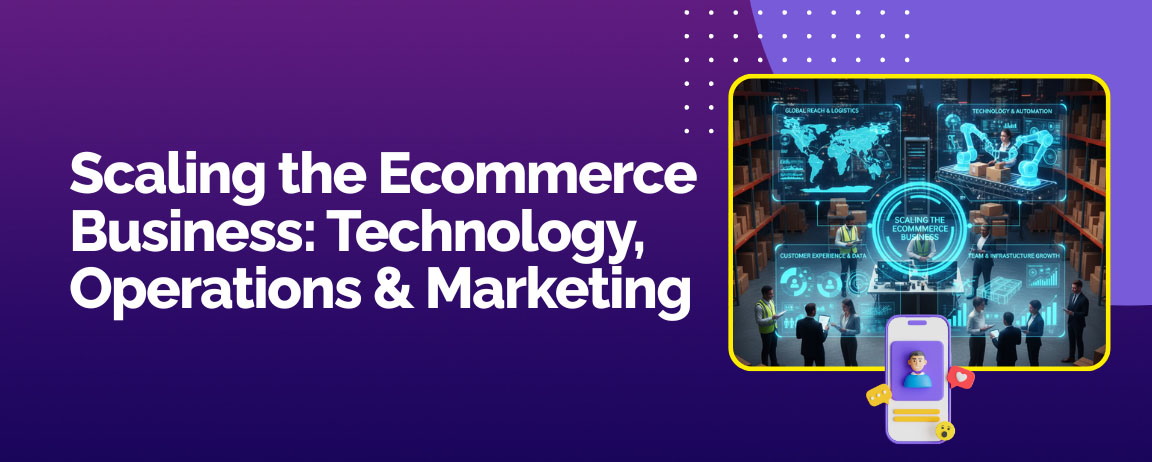
Scaling from launch to growth means focusing on three major domains:
7.1 Technology & Platform
- Consider headless commerce/omnichannel architecture to flexibly serve web, mobile, social.
- Integrate analytics, CRM, marketing automation.
- Use personalization engines, AI-driven product recommendations.
- Ensure infrastructure supports high traffic, internationalization, multi-currency if expanding.
7.2 Operations & Fulfillment
- Partner with third-party logistics (3PL) or fulfilment providers to scale.
- Automate inventory management, order processing.
- Setup data-driven restocking to avoid stock-outs.
- Optimize packaging, shipping cost; consider carbon offset or sustainable packaging for premium brand.
- Implement quality assurance processes if selling premium / niche goods.
7.3 Marketing & Growth Strategy
- Content marketing: blogs, video tutorials, how-tos to drive organic traffic.
- Paid acquisition: search, social ads, influencer campaigns.
- Email / SMS marketing: onboarding flows, cart abandonment recovery, loyalty.
- Social commerce & live shopping: host interactive events to drive urgency and engagement.
- Partnerships & affiliate marketing: collaborate with niche influencers.
- International expansion: localize website, adapt marketing, consider shipping/international logistics.
- Analytics & data: track cohort retention, customer lifetime value (CLV), churn, repeat purchase rate.
7. Real-World Case Studies: From Startup to Scale
Case Study A — Sustainable D2C Apparel Brand
A U.S. startup launched a sustainable t-shirt brand made from recycled fabrics, marketed through Instagram influencers aligned with eco-values. Within 18 months they hit six-figure monthly revenue, thanks to strong community, compelling brand story and subscription box model (monthly shirt drops). They scaled by outsourcing production, automating fulfilment and expanding product range into accessories.
Case Study B — Subscription Box for Pet Toys
A founder launched a monthly pet-toy and treat box for small dogs. They targeted a dedicated niche, used unboxing video content to drive engagement, upsold annual plans. After 12 months they had ~10,000 subscribers and retained ~60 % monthly renewal rate. Scaling involved adding breed-specific boxes and partnering with pet influencers.
Case Study C — Smart Home Accessories Store
An online store focused on smart-home accessories (voice-assistant compatible, energy-saving plugs). They built strong content (how-to videos), positioned as “starter kit for smart home,” and captured search intent from new adopters. With robust supplier relationships and bundled offers, they scaled to 8-figure revenue in 24 months.
8. Common Challenges & How to Overcome Them

Launching an ecommerce business comes with risks and obstacles. Here are common challenges and practical tips to address them:
- High competition & commodity pricing: Focus on differentiation—brand, service, niche, unique value.
- Customer acquisition cost (CAC) rising: Optimize conversion, focus on retention, leverage organic channels.
- Supply chain disruptions: Diversify suppliers, build buffer stock, use data predictive analytics.
- Logistics and fulfilment scale issues: Partner with 3PL early or use fulfilment platforms that scale with you.
- Brand building and trust: Use UGC (user-generated content), reviews, robust customer service, consistent branding.
- Technology and platform scaling: Choose a platform with headless/omnichannel flexibility; monitor load, performance, security.
- Regulation & compliance: Especially for niches like wellness or kids products; stay current on regulations, packaging, labeling.
- Cash flow management: Monitor margins, inventory turns, return rates and manage reinvestment strategically.
9. Frequently Asked Questions (FAQs)
Q1. What are some of the best ecommerce business ideas for 2026?
A: They include niche D2C brands, subscription boxes, dropshipping/print-on-demand, smart home accessories, wellness & pet ecommerce, social commerce stores, digital products, resale/circular economy platforms, and marketplace models.
Q2. How much does it cost to launch an ecommerce business in the U.S.?
A: Costs vary widely depending on model. A simple dropshipping store might launch for under $5k including website, initial marketing, and minimal inventory. A full-inventory niche brand may require tens of thousands. What matters is your business model, margin structure, marketing plan and scale readiness.
Q3. How do I pick the right ecommerce business idea?
A: Use criteria such as market demand, growth trend, differentiation, operational feasibility, scalability, personal fit and alignment with 2026 trends (sustainability, subscriptions, digital platforms).
Q4. Are subscription boxes still viable in 2026?
A: Yes — subscription models continue to offer recurring revenue and high customer lifetime value (CLV). The key is niche focus, delight in unboxing experience, retention strategies, and value perception.
Q5. Is dropshipping outdated?
A: It’s competitive and margin-challenged, but if you combine dropshipping with strong brand, AI-led trend-spotting, and superior marketing you can still succeed. The key is brand, not just product listing.
Q6. What kind of margins can I expect in ecommerce?
A: Typical gross margins vary: 30-50% for many D2C product stores, 60-80%+ for digital products. Net margin (after CAC and operations) may be much lower initially. Track customer lifetime value (CLV) and retention to build scale.
Q7. How important is mobile and social commerce?
A: Very important. U.S. ecommerce growth shows increasing mobile share and social commerce integration. One study projected mobile commerce reaching $2.51 trillion in 2025 globally. If your ecommerce business is not optimized for mobile and social, you leave growth on the table.
10. Conclusion & Next Steps with Trantor Inc.
Launching an ecommerce business in 2026 presents immense opportunity—but also demands strategic thinking, execution discipline, and a focus on scalable business models. The right ecommerce business ideas—chosen based on market insight, differentiated branding, operational feasibility and future-ready trends—can position you for long-term success.
At Trantor Inc., we partner with entrepreneurs and companies to build custom ecommerce platforms and growth-ready businesses. Whether you’re launching a niche D2C brand, building a subscription box business, expanding into social commerce, or scaling to international markets, our team delivers end-to-end development, marketing tech stack integration, and scalable architecture. Check out our custom ecommerce development services here: ecommerce development
We believe in building ecommerce businesses that aren’t just viable—but built to scale. We help you define your niche, craft your brand story, implement technology and marketing stack, and put frameworks in place for retention, operational excellence and growth. If you’re ready to turn an idea into a thriving ecommerce business, let’s talk—we’ll help you launch smart, grow fast, and build for 2026 and beyond.